Script breakdown in five steps
A practical, repeatable process for breaking down a script, from first read to a strip-ready scene list. No theory; just the workflow that gets shot.
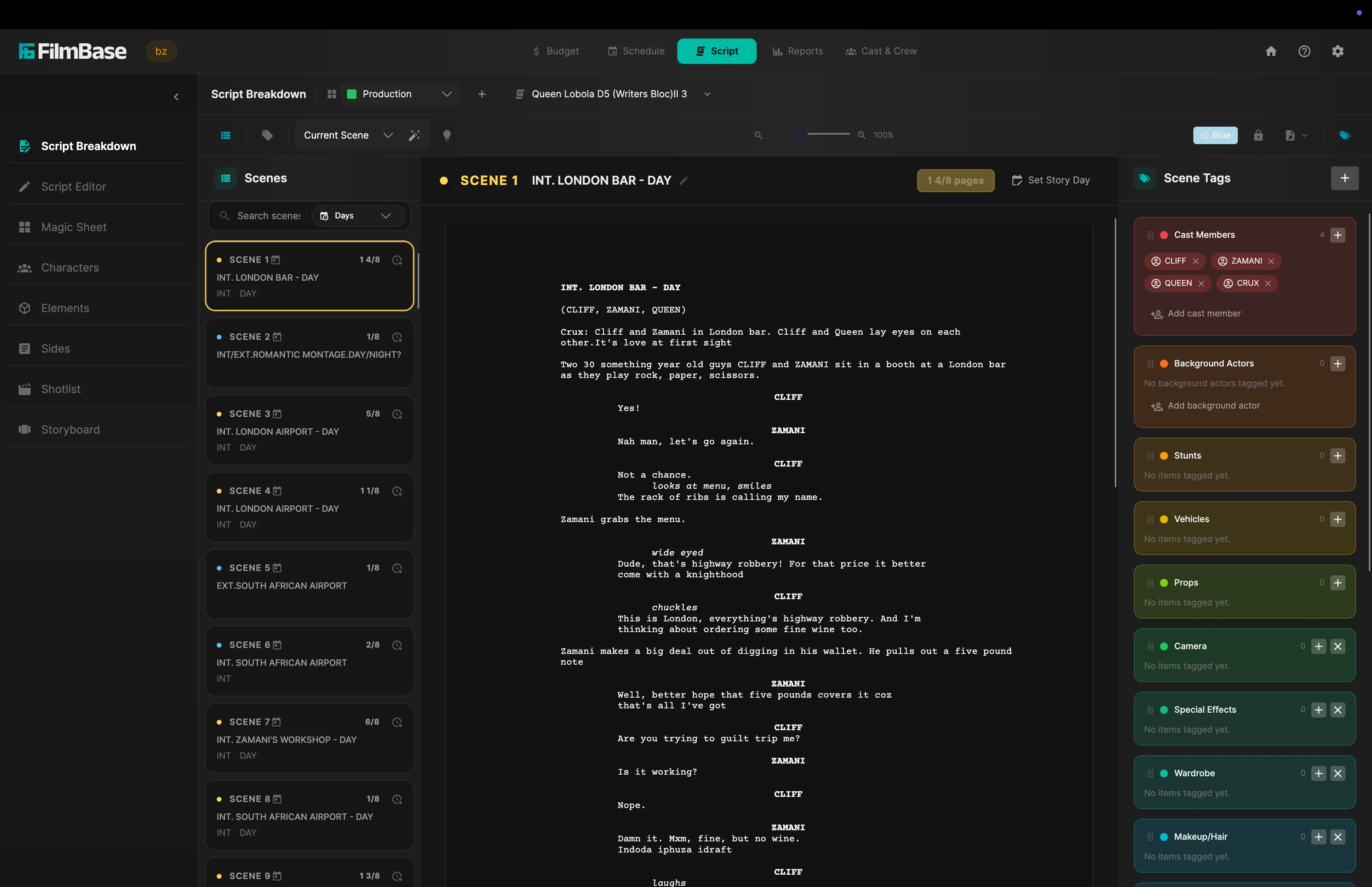
Script breakdown is the first real production task that turns a screenplay into a shoot. Done well, it makes everything downstream (scheduling, budgeting, call sheets) fall into place. Done sloppily, you’ll be paying for it on day 14 of principal photography.
If you want the tool rather than the theory, SetShaper’s script breakdown software tags elements with an AI model that runs on your own computer, so the script never leaves your drive.
Here’s the process we use.
1. The cold read
Read the script straight through, no notes. You’re checking pace, tone, and gut feel, not tagging anything yet. If you tag on the first pass you’ll over-tag and miss the shape of the story.
One sentence per scene. That’s all you write down.
2. The structural pass
Second read, this time with a pen. For each scene, mark:
- Location. INT/EXT, day/night, the actual physical space
- Time of day. Story time, not production time
- Page count. Eighths if your tooling tracks them
- Major elements. Anyone or anything that needs to be there
This is where most people stop. Don’t.
3. The element pass
Now go category by category instead of scene by scene. Pull every:
- Cast member (with their scenes attached)
- Prop, set dressing, vehicle
- Special effect, stunt, or wardrobe note
- Location requirement that isn’t just where but what (a working sink, practical light, etc.)
Doing this by category, not by scene, catches the things that hide in plain sight. A “cup of coffee” mentioned in one scene becomes a propmaster’s nightmare when it shows up in twelve.
4. The conflict pass
Read the breakdown looking for problems before the schedule does:
- Same cast in scenes at different locations on the same story day
- Practical effects that need recovery time between takes
- Locations with restricted hours (schools, hospitals, working businesses)
- Anything involving children, animals, or weather
Flag these now. They drive your schedule, not the other way around.
5. The reality check
Before handing off to scheduling, do one final read with this question: what am I lying to myself about?
That night exterior in the rain? That crowd scene with 80 background? The car chase? Be honest about what each one actually costs. If your breakdown says one thing and your gut says another, your gut is probably right.
Tooling notes
In SetShaper, the script editor highlights any element you tag once across every appearance, so adding a prop or character on page 4 surfaces it on every page where the same word appears. The breakdown pass is then a review-and-confirm flow rather than starting from scratch.
But the process matters more than the tool. A breakdown done in a notebook by someone who knows the script beats one done in expensive software by someone who doesn’t.
Tagged
Production tooling, workflows, and notes from the SetShaper team. View all posts →
Run your production in one place
Script breakdown, scheduling, budgeting and call sheets in one desktop app. Free for 7 days.